Scania hands over first hybrid truck to FMV in joint development project
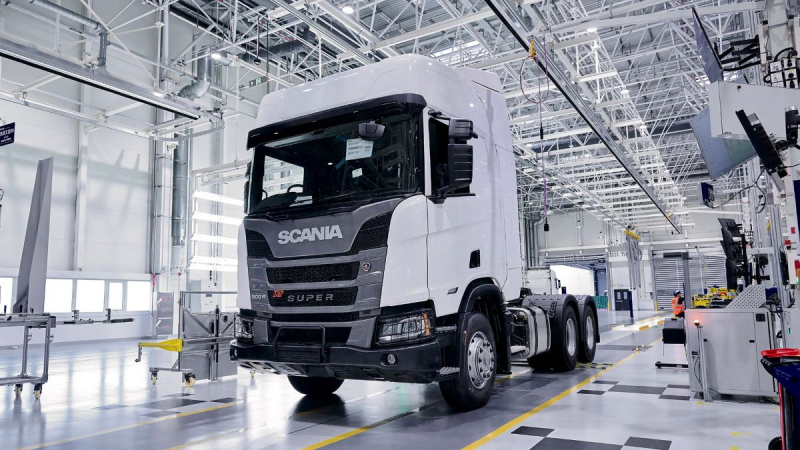
Scania is handing over the first of three hybrid trucks to FMV (the Swedish Defence Materiel Administration) as part of a joint development project. The vehicles will be evaluated by the Swedish Armed Forces across the three service branches and will contribute to increased knowledge of how hybrid technology can be used to meet military requirements.

The first handover takes place in connection with Eurosatory in Paris. FMV has purchased three hybrid trucks from Scania as part of a joint development project, with the aim of testing and further developing the technology in close dialogue between industry, authority and end user.
The hybrid trucks will be used to better understand the opportunities that electrified powertrains can bring to military applications. These include fuel-efficient operation, the possibility of silent movement using electric propulsion, and the ability to use the vehicle’s battery and generator to supply power to external equipment, such as command posts, sensor equipment or temporary camps.
Scania’s hybrid solution is a plug-in parallel hybrid, where the combustion engine and electric motor can power the vehicle either separately or together. This provides flexibility across different types of missions and environments. The electric motor contributes instant torque, strong manoeuvrability at low speeds and the possibility of silent movement for limited periods. The electric range is approximately 70 to 80 kilometres, depending on use, load and conditions.
The vehicle can also be used as a mobile energy platform. This means it can supply electricity to external equipment even when the vehicle is stationary, something that is becoming increasingly important in modern defence operations where command, sensors, communications and other equipment require reliable power supply close to the operational area.
Today, diesel generators are often used to supply power to external equipment. The difference with a battery solution is that power can be supplied completely silently, creating new opportunities in environments where acoustic signature and detection risk need to be reduced.
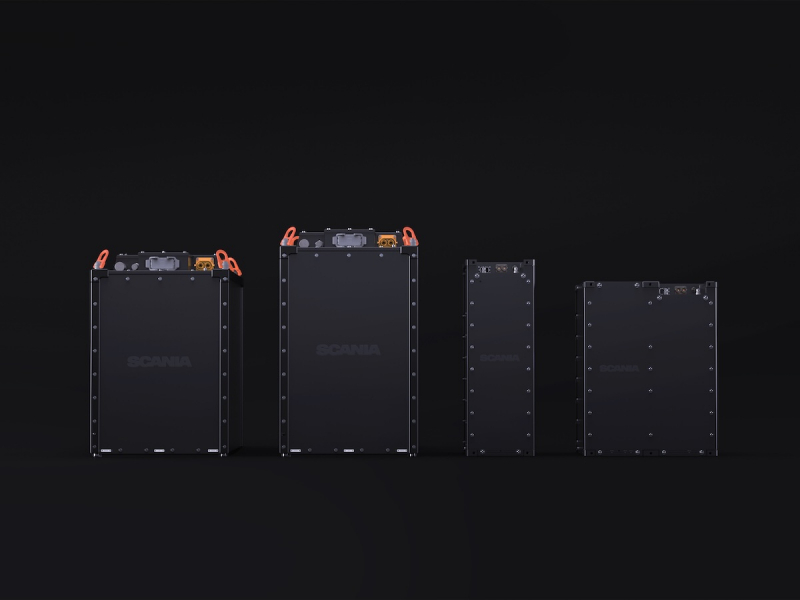
The battery capacity of the current solution is 208 kWh. At around 75 percent state of charge, this corresponds to approximately 156 kWh of available energy. The vehicle can provide around four hours of continuous AC power supply, and the battery can be charged from 0 to 100 percent using the combustion engine in approximately 45 to 60 minutes at idle.
“The defence sector is facing changing requirements, where power supply, mobility and flexibility are becoming increasingly important. Through this cooperation with FMV, we can develop and evaluate hybrid technology under real conditions, while also demonstrating how Scania’s industrial capability can contribute to future defence solutions,” says Stefano Fedel, Head of Scania Commercial.
Scania is now exploring how the production of hybrid trucks for defence applications can be industrialised, with the aim of making the solution part of the company’s modular system. This would enable the technology to be adapted to different vehicle configurations, missions and defence customer requirements.
“We see clear potential for hybrid solutions in heavy military vehicles. It is about combining robustness and mobility with new opportunities for power supply and quieter operation. For Scania, this is an important step in the development of future defence solutions,” says Fedel.
The project strengthens the collaboration between FMV, the Swedish Armed Forces and Scania around the heavy wheeled vehicles of the future. For FMV and the Swedish Armed Forces, the vehicles provide an opportunity to test the technology operationally. For Scania, the project provides valuable knowledge in the work to develop hybrid solutions that can be scaled up and adapted to the requirements of the defence sector.