Volvo Group plans one of Sweden’s largest energy parks in Mariestad
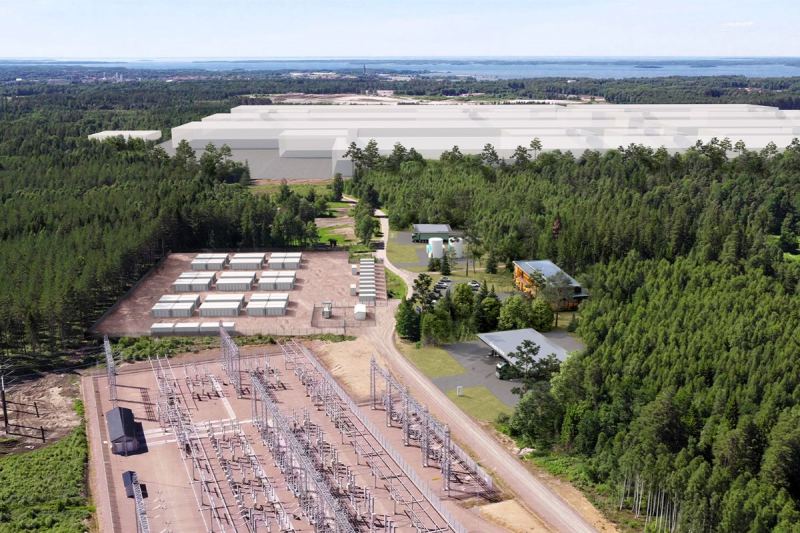
Volvo Group is planning an energy park near its intended battery cell production site in Mariestad, Sweden. The first phase is expected to provide around 70 MW/260 MWh of battery storage capacity and become operational in 2027.

The Volvo Mariestad energy park will be developed along two parallel tracks: a large-scale battery energy storage facility and a future test bed for innovative energy solutions.
In the first phase, Volvo Battery Energy Storage Systems (BESS) supplied by Volvo Energy will be installed to store electricity and support the regional grid. The stored energy can be fed back into the grid when needed, helping improve flexibility, stability and resilience in a region with high energy consumption and several Volvo Group production facilities.
The site will also serve as a full-scale demonstration and testing environment. Volvo Group intends to use it to develop energy solutions and customer offerings together with customers and other partners.
“This initiative is a natural next step in the development of our Mariestad facility and reflects our vision of a more robust, flexible and sustainable energy system,” says Lars Stenqvist, responsible for the development of the Mariestad site at Volvo Group.
“The energy park in Mariestad, which will be one of the largest in Sweden with around 70 MW/260 MWh of battery storage, will support Volvo Group’s and Sweden’s decarbonisation ambitions. It will also provide a valuable test bed for testing and further advancing energy solutions for our customers.”
Volvo Group has previously announced plans to establish a large-scale battery cell production plant in Mariestad to meet growing demand for battery-electric heavy-duty vehicles and machines. Production at the plant is scheduled to begin after 2030.
Together with Volvo Group’s existing powertrain plant in nearby Skövde, the planned battery cell plant and energy park will strengthen the company’s industrial and logistics cluster in the region and create opportunities for shared infrastructure and capabilities.